What to Expect From a Metal Building Investment Over 10 Years
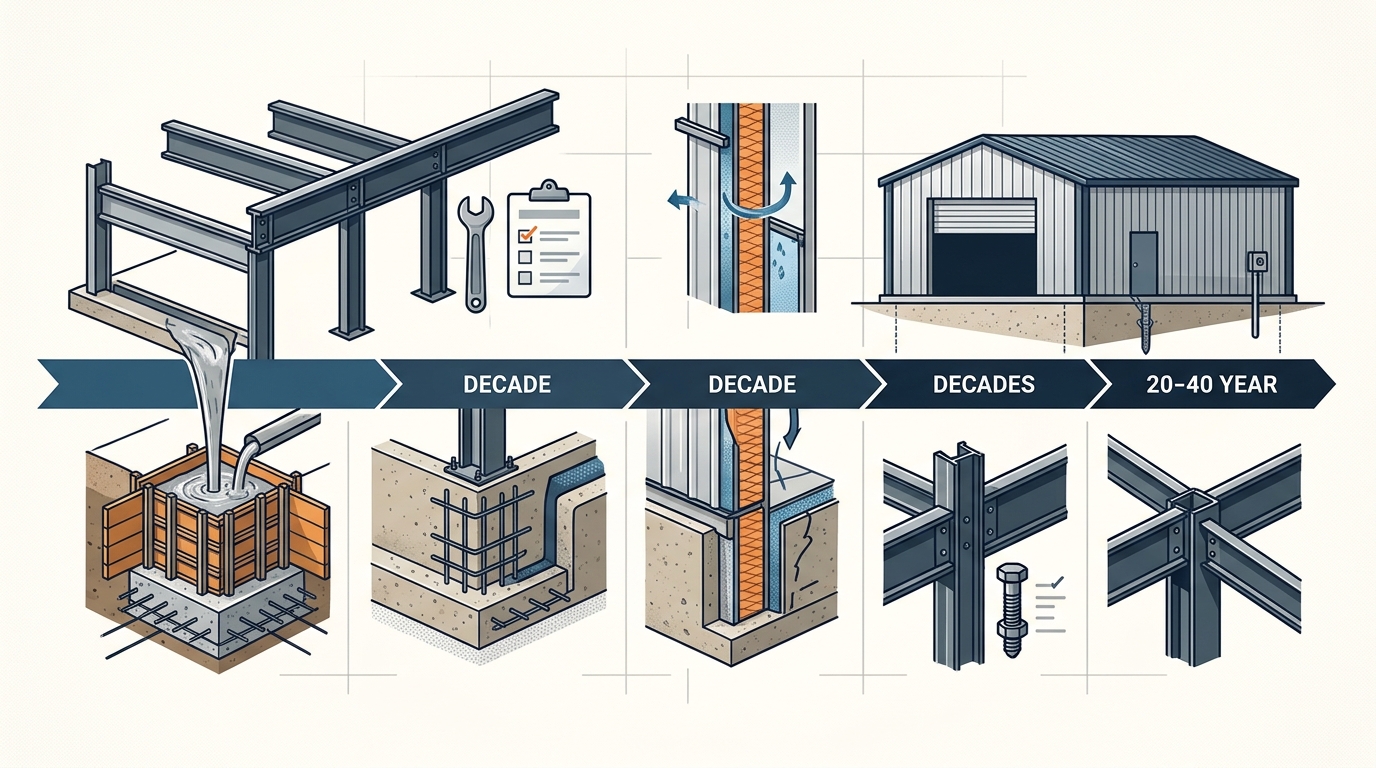
A metal building investment typically delivers a 20 to 40 year lifespan with minimal structural maintenance, provided the foundation is correct and condensation is managed. Stoots Storage Solutions helps you plan for these long-term variables by handling both the concrete foundation and the steel installation under one roof, ensuring the structure is anchored properly for your specific local weather conditions.
Structural Integrity and Material Durability
The primary advantage of a steel frame is its resistance to the biological and environmental factors that destroy wood. Wood framing is susceptible to rot, termites, and warping, which can compromise a structure's safety over a decade. Steel does not rot, warp, or feed pests, meaning the core skeleton of your building remains stable for decades. At Stoots Storage Solutions, we use certified steel frames that are engineered to hold their shape despite seasonal temperature changes.
However, steel has its own enemy: rust. Over a 10-year period, the main structural risk is not the frame itself, but the fasteners and panel coatings. If water sits in panel seams or if scratches expose bare metal, rust can begin to form. To mitigate this, we recommend a vertical roof style, which is chosen by about 80% of our customers. The vertical panel orientation allows rain, snow, and leaves to shed off the roof rather than sitting in the grooves, significantly reducing the chance of water pooling and causing corrosion.
Foundation Performance and Site Stability
A metal building is only as good as the ground it sits on. Over a 10-year horizon, the foundation is the most critical component for long-term stability. A concrete slab or footer system must be poured below the local frost depth to prevent heaving during winter freezes. If the foundation is not engineered for your specific county's frost depth and soil conditions, you may experience shifting or cracking over time.
Stoots Storage Solutions handles the entire foundation process, from site grading to pouring footers and slabs. We pull USGS elevation data and LiDAR data for your property to assess slope and drainage before we even visit the site. This ensures that water drains away from the building, preventing the moisture buildup that can degrade a concrete slab over a decade. By managing the concrete and the steel under one roof, we eliminate the risk of mismatched anchor points between two different contractors.
Weather Resistance and Local Load Ratings
Your building must be certified for the specific wind and snow loads of your location. A generic rating is not enough; your structure needs to be engineered for your exact address. In areas like Southwest Virginia, where we are based, snow load is a major factor. A building that is not rated for local snow accumulation can suffer from structural stress or roof deformation over several winters.
We provide engineered drawings that match your county's specific requirements. This is not just a bureaucratic step; it is a safety measure that ensures your building can withstand the worst weather your region will see over the next 10 years. Whether you are in a high-wind zone in Florida or a heavy-snow zone in New York, the certification ensures the frame is strong enough to handle the load without deforming.
Interior Environment and Condensation Control
One of the most common complaints about metal buildings is condensation. Warm, moist air inside the building hits the cold steel roof and walls, turning into water droplets that drip onto your stored items. Over 10 years, this can lead to rust on tools, mold on stored goods, and water damage to the floor. Insulation is the primary defense against this issue.
Adding insulation, such as blanket fiberglass or spray foam, creates a barrier between the warm interior air and the cold steel. This not only improves comfort if you plan to heat or cool the space but also protects your investment from moisture damage. We recommend discussing insulation options early in the design process, as it is much easier to install during construction than to add later. For agricultural uses, such as hay storage, controlling condensation is essential to maintaining the value of your stored materials.
Maintenance Requirements and Long-Term Costs
Compared to a stick-built wood garage, a metal building requires significantly less maintenance. You do not need to paint the siding or replace shingles every few years. However, a 10-year investment still requires some basic upkeep to ensure longevity. The most important maintenance task is a yearly inspection of the fasteners and panel seams.
Over time, screws can work loose, and seals can degrade. A simple annual check to tighten loose fasteners and touch up any scratches in the coating can prevent minor issues from becoming major repairs. Stoots Storage Solutions provides guidance on building care, including how to wash the panels and check the anchors. By following a simple maintenance schedule, you can extend the life of your building well beyond the initial 10-year mark.
Key Takeaways
- A steel frame does not rot, warp, or attract pests, offering superior structural stability compared to wood over a 10-year period.
- The foundation must be poured below the local frost depth to prevent shifting and cracking due to seasonal freezing.
- Vertical roof styles are recommended for most enclosed buildings to ensure snow and rain shed off efficiently, reducing corrosion risk.
- Condensation is the primary interior threat; insulation and vapor barriers are essential for protecting stored items from moisture.
- Annual inspections of fasteners and panel coatings are the most effective way to prevent rust and maintain structural integrity.
- Engineered drawings certified for your specific county's wind and snow loads are critical for long-term safety and code compliance.
Frequently Asked Questions
How long does a metal building actually last?
With proper maintenance and a solid foundation, a metal building can last 20 to 40 years or more. The steel frame is durable, but the lifespan is often determined by the condition of the fasteners, coatings, and foundation.
Is a metal building a good investment for a small business?
Yes, metal buildings offer a high return on investment due to their low maintenance costs and long lifespan. They provide a large amount of usable space for a lower upfront cost compared to conventional construction.
What is the most common cause of metal building failure?
The most common issues are foundation problems and condensation. If the foundation is not poured correctly or if condensation is not managed, it can lead to structural shifting or interior damage over time.
Do I need to paint a metal building?
No, modern metal buildings come with factory-applied coatings that do not require painting. You only need to touch up scratches to prevent rust, which is a much simpler task than painting wood siding.
How does a vertical roof affect the building's lifespan?
A vertical roof helps extend the lifespan by allowing water and debris to shed off the roof quickly. This prevents water from sitting in the panel grooves, which can lead to corrosion and leaks over time.
Can I add insulation later if I don't install it now?
It is possible to add insulation later, but it is much more difficult and expensive. It is highly recommended to install insulation during the initial construction phase to ensure proper sealing and vapor barrier placement.