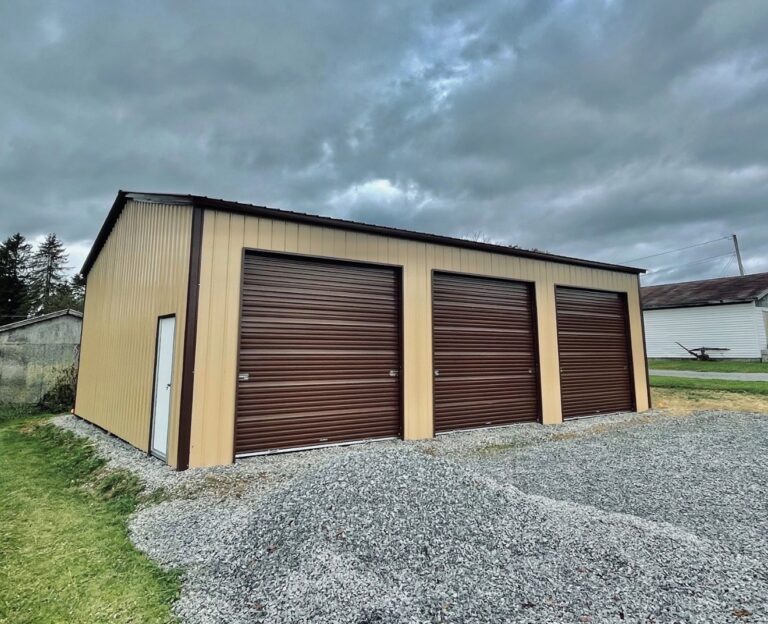
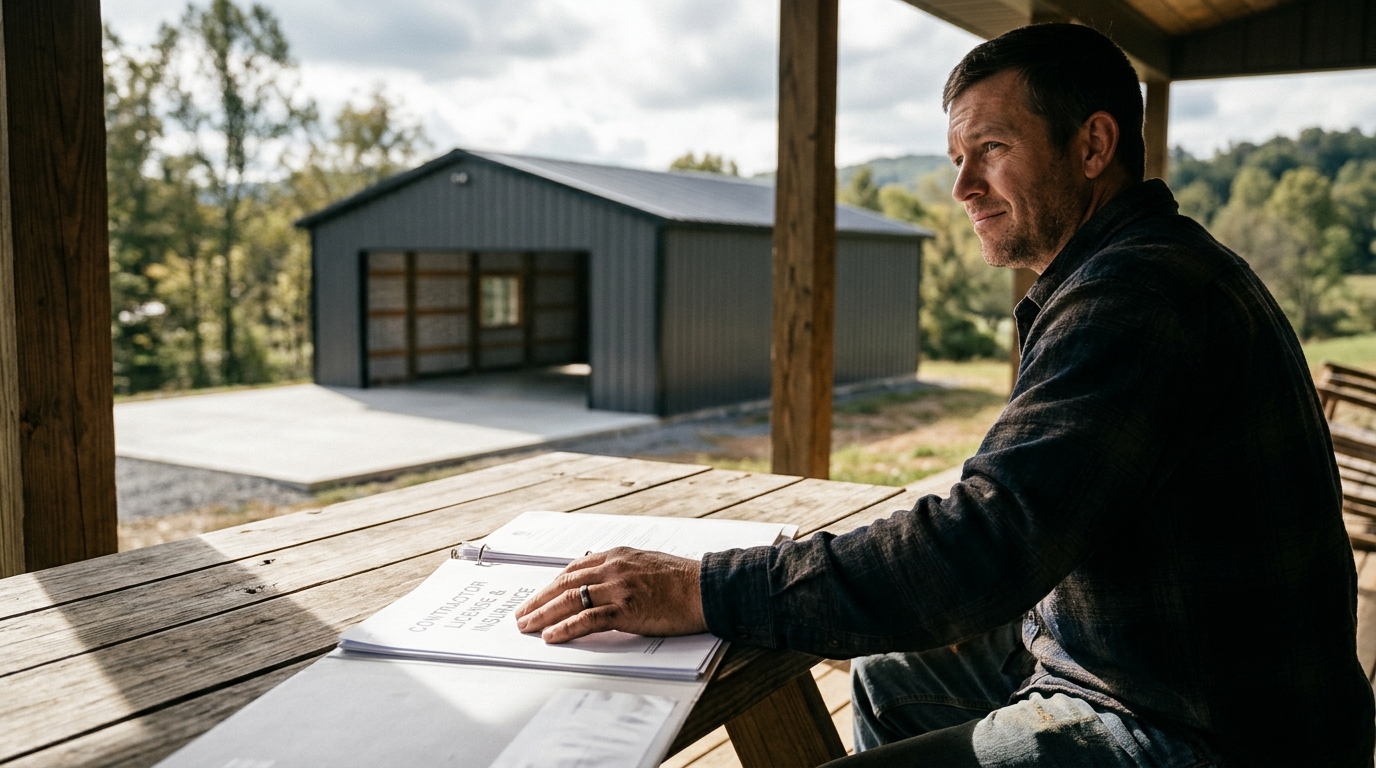
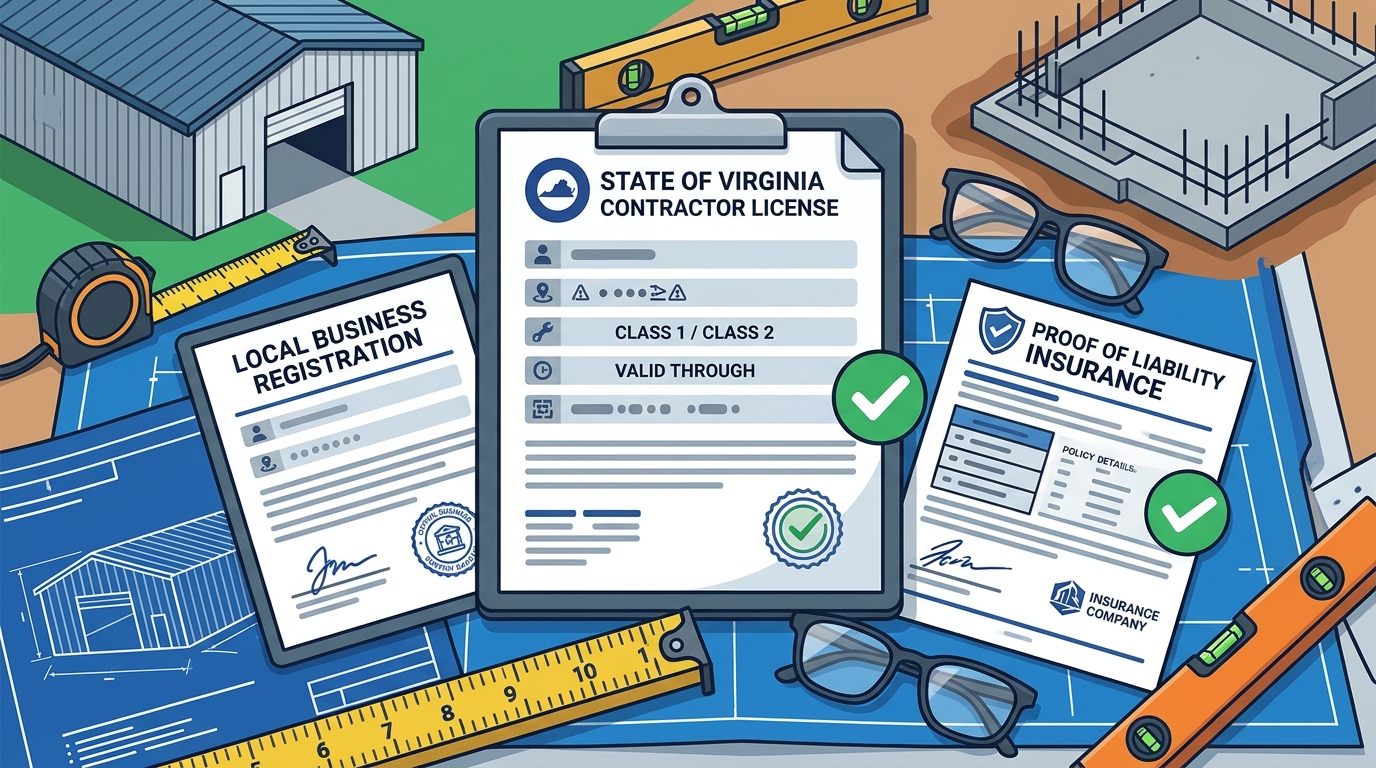
Before hiring a contractor for a backyard workshop, verify their state-specific general contractor license, local business registration, and proof of liability insurance. In Virginia, for example, you must confirm the contractor holds a valid Class 1 or Class 2 license if the project exceeds specific cost thresholds. Stoots Storage Solutions emphasizes that checking these credentials protects your investment and ensures the build meets local code requirements.
State Licensing Requirements
State licensing is the first line of defense against unqualified builders. A general contractor license is a state-issued credential that verifies a business has the financial, legal, and technical capacity to manage construction projects. In Virginia, the Department of Professional and Occupational Regulation (DPOR) regulates these licenses. You can verify a contractor's status by searching the DPOR license lookup tool. If a contractor claims to be licensed but does not appear in the state database, do not proceed with the contract.
For smaller projects, some states allow unlicensed individuals to perform work under a certain dollar amount. However, a detached workshop often involves structural steel and concrete, which typically requires a licensed professional. Stoots Storage Solutions operates with full compliance in Virginia and North Carolina, ensuring that every project is managed by a licensed entity. This transparency allows homeowners to verify credentials directly with the state before signing any agreement.
Local Business Registration and Permits
State licenses are necessary but not sufficient. You must also check for local business registration and the ability to pull permits. A local business license is a municipal or county permit that allows a company to operate legally within a specific jurisdiction. Many contractors hold state licenses but fail to register locally, which can lead to permit rejections. When you hire a contractor, ask who will pull the building permit. In most jurisdictions, the permit must be in the name of the licensed contractor, not the homeowner.
Stoots Storage Solutions handles the entire permitting process, including zoning and building permits. We verify local requirements for setbacks, wind loads, and frost depths before quoting a project. This approach prevents delays that often occur when a contractor is unfamiliar with local county rules. By checking local registration, you ensure the contractor is established in your area and accountable to local authorities.
Insurance and Bonding Verification
Insurance is a critical component of contractor vetting. General liability insurance is a policy that covers third-party claims for bodily injury or property damage caused by the contractor's operations. You should request a Certificate of Insurance (COI) that names you as an additional insured. This protects your property if a worker is injured on your site or if equipment damages your landscaping. Additionally, check for workers' compensation coverage. If a contractor does not carry workers' comp, you may be liable for injuries sustained by their employees on your property.
Bonding is another layer of protection. A surety bond is a financial guarantee that the contractor will complete the job as specified. If the contractor fails to perform, the bond provides a financial remedy. Stoots Storage Solutions maintains comprehensive insurance coverage for all crews and equipment. We provide COIs upon request, allowing you to verify coverage limits directly with the insurance provider. This step is non-negotiable for any serious construction project.
Specialized Credentials for Steel and Concrete
Not all general contractors specialize in metal buildings or concrete foundations. A specialized contractor is a professional with specific training and experience in a particular trade, such as steel erection or concrete pouring. For a workshop, you need a contractor who understands both the structural steel and the foundation work. Stoots Storage Solutions is a family-run business that handles both the concrete foundation and the steel installation under one roof. This dual expertise ensures that the anchors are placed correctly and the slab is level, which is critical for the longevity of the building.
When evaluating a contractor, ask about their experience with similar projects. Request references from recent jobs and, if possible, visit a completed site. Stoots Storage Solutions has a gallery of real customer installs that demonstrate our work quality. We have cut ties with 53 manufacturers over quality concerns, which reflects our commitment to using only reliable materials. This level of scrutiny extends to our own team, ensuring that every crew member is trained and certified for the specific tasks they perform.
Red Flags to Watch For
Even with licenses and insurance, some contractors exhibit red flags that should give you pause. A red flag is a warning sign that indicates potential issues with a contractor's reliability or integrity. Common red flags include pressure to pay in full upfront, vague quotes, and a lack of written contracts. A legitimate contractor will provide a detailed, line-by-line quote that specifies materials, labor, and timeline. Stoots Storage Solutions provides written quotes that break down the cost of the building, concrete, and installation separately. This transparency allows you to compare bids accurately and avoid hidden costs.
Another red flag is a contractor who refuses to provide references or proof of insurance. If a contractor cannot produce a COI or a license number, walk away. Stoots Storage Solutions encourages customers to verify our credentials through state databases and to ask for references. We believe that trust is earned through transparency and consistent performance. By checking these red flags, you protect yourself from scams and substandard work.
Key Takeaways
- Verify the contractor's state general contractor license through the official state database.
- Confirm local business registration and the contractor's ability to pull permits in your jurisdiction.
- Request a Certificate of Insurance (COI) that names you as an additional insured.
- Check for workers' compensation coverage to protect yourself from liability for worker injuries.
- Look for specialized experience in steel buildings and concrete foundations.
- Be wary of contractors who pressure for upfront payment or provide vague quotes.
- Use a written contract that details scope, timeline, and payment terms.
Frequently Asked Questions
Do I need a license to build a workshop myself?
In most states, homeowners can perform work on their own property without a contractor license, provided they pull the necessary permits. However, you are responsible for ensuring the work meets code. If you hire a contractor, they must be licensed.
How do I verify a contractor's license in Virginia?
You can use the Virginia DPOR license lookup tool to search for a contractor's license number and status. This tool is free and provides real-time information on active licenses.
What is a surety bond?
A surety bond is a three-party agreement that guarantees the contractor will complete the project as specified. If the contractor fails, the bond provides financial compensation to the homeowner.
Can I use a general contractor for a metal building?
Yes, but ensure they have experience with steel structures and concrete foundations. Stoots Storage Solutions specializes in turnkey metal buildings and concrete, handling both aspects under one contract.
What should be included in a written contract?
A written contract should include the scope of work, materials, timeline, payment schedule, and warranty terms. It should also specify who is responsible for pulling permits and inspections.
How much insurance coverage should a contractor have?
Conclusion
Checking contractor licenses and credentials is a critical step in protecting your investment in a backyard workshop. By verifying state licenses, local registration, insurance, and specialized experience, you ensure that your project is in capable hands. Stoots Storage Solutions is committed to transparency and quality, providing all necessary documentation and credentials upon request. To start your project with confidence, for a free quote and credential verification. Learn more: Contact Free Quote Stoots.