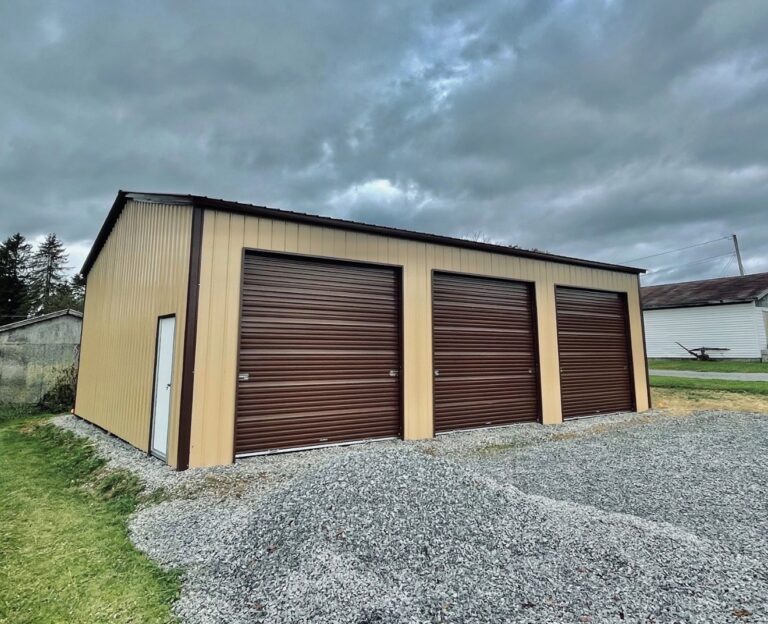
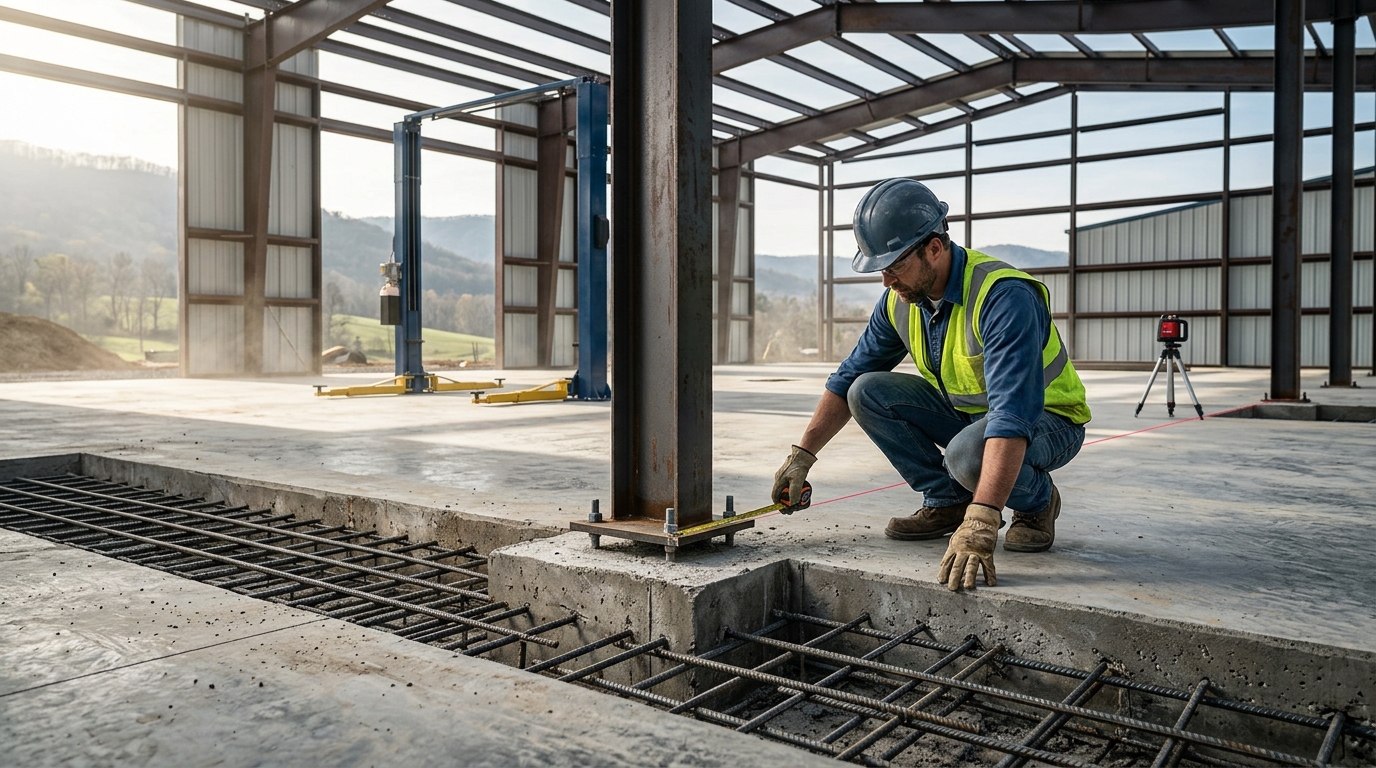
Heavy shop equipment requires a concrete foundation sized to handle concentrated point loads, not just the building's dead weight. Standard 4-inch slabs often fail under car lifts or CNC machines because they lack the necessary thickness, reinforcement, or isolated pads. Stoots Storage Solutions engineers foundations to match your specific equipment list, ensuring the slab supports the loads before the steel frame is even erected.
Why Standard Slabs Fail Under Heavy Loads
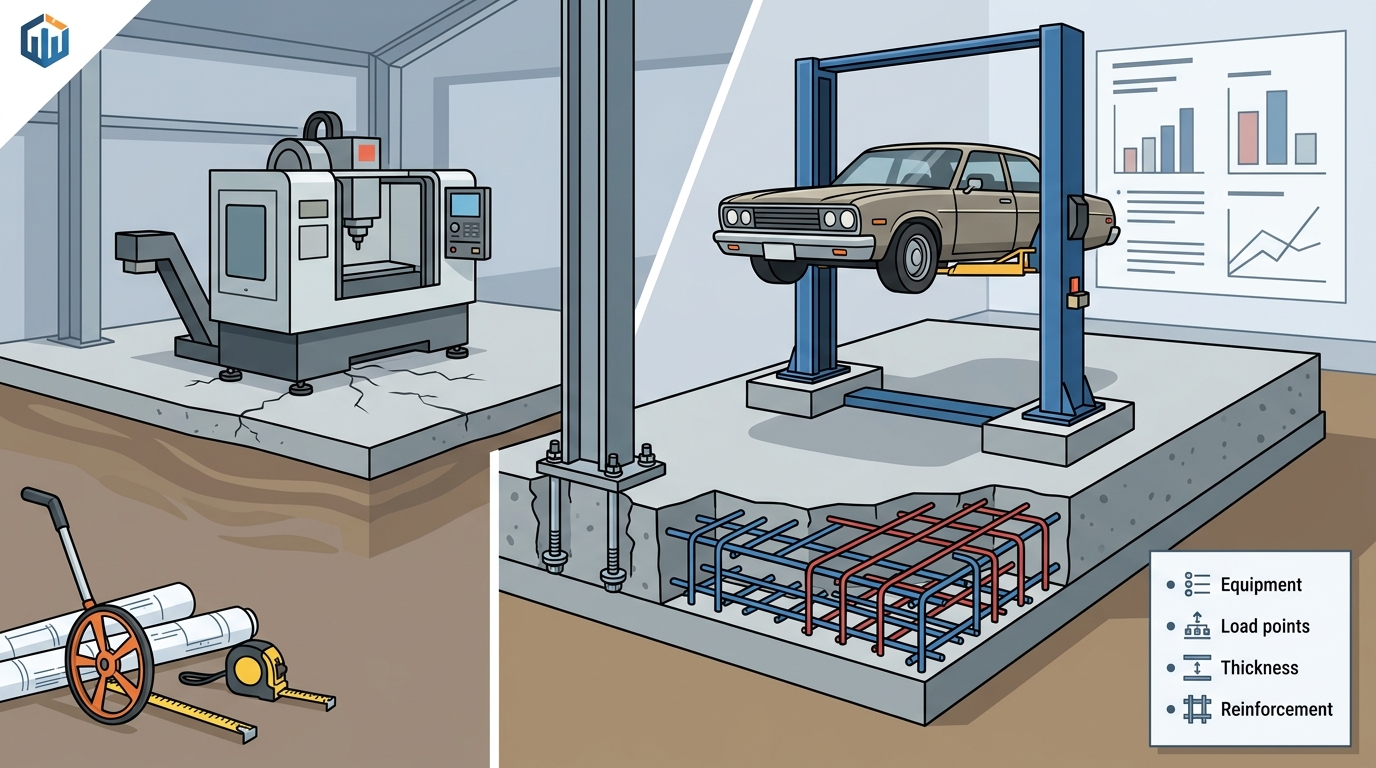
A standard residential or light commercial slab is designed for distributed loads, such as foot traffic or light shelving. When you introduce a two-post car lift or a heavy milling machine, the load becomes concentrated in a small area. This creates high stress points that can crack a standard 4-inch slab. The concrete must be thick enough and reinforced properly to transfer that weight safely to the footers below.
At Stoots Storage Solutions, we do not pour a generic slab and hope it holds. We look at the specific equipment you plan to install. If you are running a 4-post lift, the manufacturer's installation guide will specify a minimum concrete thickness and load capacity. We use those specs to design the slab. This prevents the common issue where a building is installed, only for the floor to crack when the first heavy vehicle is lifted.
Calculating Thickness and Reinforcement
Concrete thickness is the primary defense against point loads. For most light shop use, a 4-inch slab is sufficient. However, heavy equipment often requires 6-inch or 8-inch slabs. The difference is not just in the depth of the concrete, but in the reinforcement inside it. Wire mesh or fiber reinforcement helps control cracking, but heavy loads often require rebar grids or thicker pads under the specific machine locations.
Reinforcement is the internal structure that gives concrete its tensile strength. Concrete is strong in compression but weak in tension. When a heavy machine sits on a slab, it creates tension forces that can pull the concrete apart. By adding rebar or thicker pads, we ensure the slab can handle these forces without failing. We coordinate with your equipment list to determine where these reinforcements are needed.
Isolated Pads vs. Full Slab Upgrades
Not every heavy machine requires a thicker slab across the entire building. Sometimes, the best solution is an isolated pad. An isolated pad is a thicker, reinforced section of concrete poured specifically under a heavy machine. This allows the rest of the shop to remain a standard 4-inch slab, saving you money on concrete and labor. The pad is designed to handle the specific weight of the machine, while the surrounding slab handles general traffic.
For example, a CNC machine might weigh several thousand pounds. Instead of pouring an 8-inch slab for the whole 40x60 building, we might pour a 6-inch slab with a 10x10 foot isolated pad under the machine. This targeted approach is more cost-effective and structurally sound. We help you decide which machines need isolated pads and which can sit on a standard slab.
Footer Depth and Frost Line Considerations
The slab is only as good as the footers beneath it. Footers are the concrete base that carries the building's weight into the ground. In cold climates, footers must be poured below the frost line to prevent heaving. If the footers are too shallow, the ground freezing and thawing can lift the building, causing cracks in the slab and damage to the steel frame. Stoots Storage Solutions pours footers to your county's specific frost depth, ensuring the foundation remains stable year-round.
Heavy equipment adds to the load on these footers. If you have a large, heavy machine in the center of the building, the footers must be sized to handle that additional weight. We use engineered drawings to ensure the footers are deep and wide enough to support both the building and the equipment. This prevents long-term settlement issues that can ruin a shop floor.
Planning Your Foundation with Stoots Storage Solutions
Getting the foundation right is a matter of planning, not guessing. We work with you to list every piece of equipment you plan to install, including future additions. This list drives the engineering of your slab and footers. We pour the concrete and install the building with the same crew, so there is no finger-pointing if something is off. The slab is poured to fit your building's exact layout and your equipment's load requirements.
If you are building a shop with heavy equipment, do not rely on a generic quote. Contact Stoots Storage Solutions to discuss your equipment list and site conditions. We will help you design a foundation that supports your tools and your business for years to come.
Key Takeaways
- Standard 4-inch slabs often fail under heavy point loads like car lifts or CNC machines.
- Concrete thickness and reinforcement must be matched to the specific weight of your equipment.
- Isolated pads can save money by thickening concrete only where heavy machines sit.
- Footers must be poured below the local frost line to prevent heaving and cracking.
- Engineered drawings ensure the foundation supports both the building and the equipment.
- One crew handling both concrete and steel installation eliminates coordination errors.
Frequently Asked Questions
How thick should a concrete slab be for a car lift?
Most car lift manufacturers require a minimum of 4 to 6 inches of concrete, depending on the lift type and load capacity. Always check the specific installation guide for your lift model. Stoots Storage Solutions can pour the slab to these exact specifications.
Do I need rebar in my shop slab?
Rebar is often required for heavy equipment to control cracking and add tensile strength. Wire mesh may be sufficient for light loads, but rebar is recommended for heavy machines. We help you determine the right reinforcement for your specific equipment.
What is an isolated pad?
An isolated pad is a thicker section of concrete poured under a specific heavy machine. It allows the rest of the slab to be thinner, saving on material costs while still supporting the heavy load.
How deep do footers need to be?
Footers must be poured below the local frost line to prevent heaving. The exact depth varies by county and region. Stoots Storage Solutions checks your local code and frost depth to ensure your footers are deep enough.
Can I add heavy equipment later?
It is best to plan for future equipment before pouring the slab. Adding heavy equipment later may require cutting and reinforcing the existing slab, which is costly and disruptive. Tell us about any future plans when we design your foundation.
Who is responsible if the slab cracks?
If the slab is poured to the engineered specifications, the contractor is responsible for the pour. If the equipment exceeds the designed load, the owner is responsible. Stoots Storage Solutions ensures the slab is poured to match your equipment list, so you are covered.