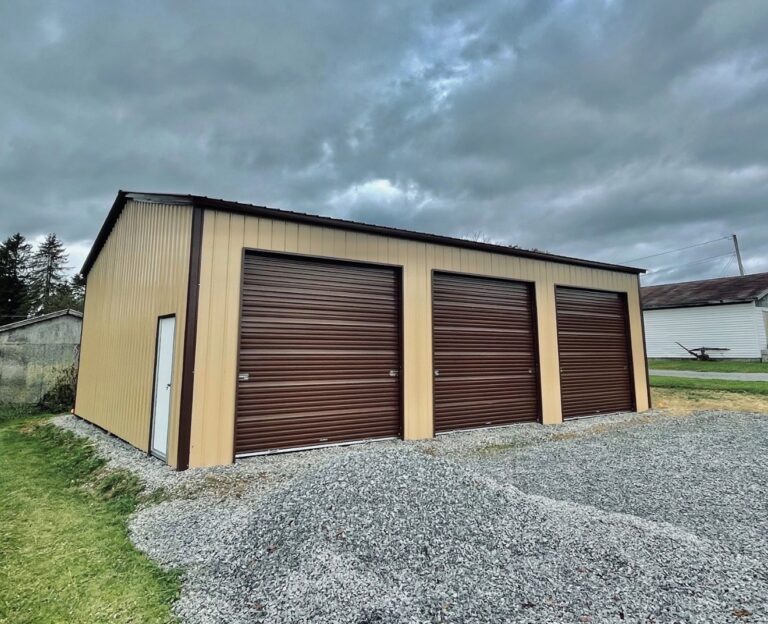
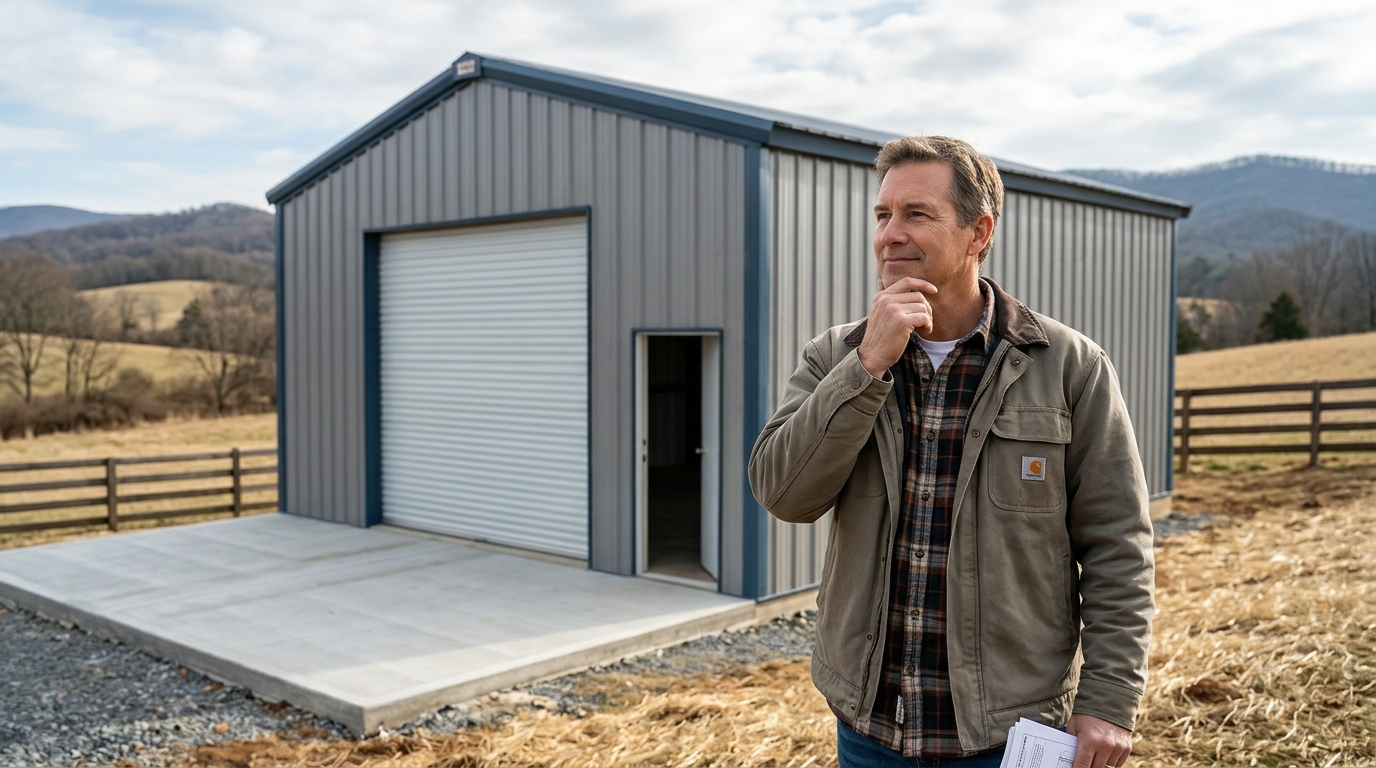
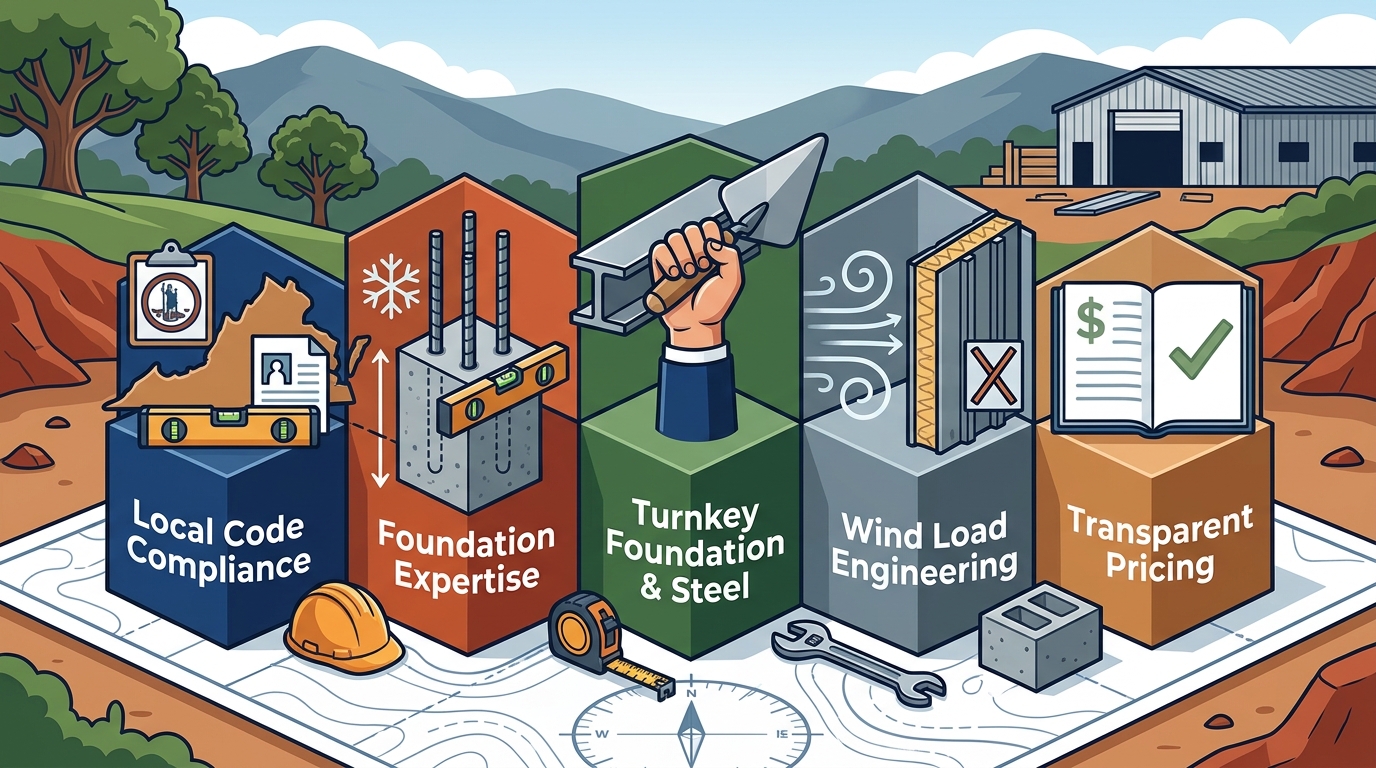
Choosing a metal workshop builder in Virginia requires verifying local code compliance, foundation expertise, and transparent pricing. You must confirm the builder handles both concrete and steel installation to avoid liability gaps. Stoots Storage Solutions, based in Southwest Virginia, provides a model for this integrated approach, ensuring your workshop meets local frost depth and wind load requirements from the start.
Foundation Expertise and Local Frost Depth
A steel building is only as stable as the concrete beneath it. Many dealers sell the steel but outsource the concrete, creating a gap where neither party takes full responsibility for the foundation. This separation often leads to misaligned anchors or slabs that crack due to improper frost depth calculations. In Virginia, frost depth varies significantly by locality, ranging from 12 to 24 inches depending on the specific county and elevation.
Frost depth is the depth to which the ground freezes during a typical winter, and footers must extend below this line to prevent heaving. If a builder does not pour the concrete themselves, they may not understand how the anchor points interact with the slab thickness and reinforcement. Stoots Storage Solutions handles both the footer pour and the steel erection, ensuring the anchors are placed precisely where the concrete crew knows they need to be. This single-crew approach eliminates the finger-pointing that occurs when a dealer and a separate concrete contractor disagree on site conditions.
Code Compliance and Engineered Drawings
Virginia building codes require specific wind and snow load ratings for structures, and these numbers change from one county to the next. A builder who uses generic, non-engineered drawings may provide a building that fails inspection or, worse, fails structurally during a severe storm. You must ask for engineered drawings stamped by a licensed engineer that match your specific address and local code requirements.
Engineered drawings are stamped plans that demonstrate a building is designed to handle specific local loads, including wind speed and snow accumulation. For example, the City of Galax in Virginia requires an 18-inch frost depth and specific wind load ratings for residential and garage structures. A reputable builder will verify these local numbers before quoting. Stoots Storage Solutions checks local snow loads, wind speeds, and frost depths for your specific address before providing a quote. This ensures the building is certified for your location, not just a generic rating that might not satisfy your local building inspector.
Transparent Pricing and Quote Comparison
Two quotes for the same size building can differ by thousands of dollars, often because the scope of work is not identical. A lower price may exclude site preparation, concrete, or specific steel gauges. To compare quotes fairly, you must ensure both builders are quoting the same building specifications, including frame gauge, sheet metal gauge, and frame spacing.
Frame spacing is the distance between trusses or bows, typically 4 or 5 feet on center, and closer spacing generally indicates a stronger structure. Many low-bid builders widen this spacing to cut costs, which can compromise the building's integrity. Stoots Storage Solutions provides written, line-by-line quotes that break down the building, concrete, and installation costs separately. This transparency allows you to see exactly what is included and what is excluded, preventing surprises during the build process. Always ask for a detailed breakdown that lists the steel gauge, anchor types, and concrete specifications.
Manufacturer Vetting and Quality Control
Most metal building dealers act as middlemen, selling steel from various manufacturers without taking responsibility for the final installation quality. This model can lead to inconsistent product quality and poor customer support. A builder who has vetted their manufacturers and cut ties with low-quality suppliers demonstrates a commitment to long-term durability and customer satisfaction.
Manufacturer vetting is the process of evaluating and selecting steel suppliers based on product quality, integrity, and reliability. Stoots Storage Solutions has cut ties with 53 manufacturers over quality and integrity issues, keeping only the four they trust enough to put on their own property. This level of selectivity ensures that the steel you receive is of high quality and that the builder stands behind it. When choosing a builder, ask how many manufacturers they work with and why they chose those specific partners. A builder who is willing to walk away from sales to maintain quality standards is a safer choice for a long-term investment like a workshop.
Local Reputation and Review Verification
Online reviews are a critical tool for assessing a builder's reliability, but they must be verified for authenticity. Fake reviews are common in the construction industry, often posted in clusters or by accounts with little other activity. A genuine reputation is built over time through consistent, detailed feedback from real customers.
Review verification is the practice of checking the authenticity and consistency of online customer feedback across multiple platforms. Look for reviews that mention specific details about the job, such as the crew's professionalism, site preparation, and problem resolution. Stoots Storage Solutions maintains a 4.8-star rating on Google with reviews that reflect real customer experiences. Check both Facebook and Google reviews to ensure consistency. If a company has hidden reviews or a sudden spike in generic praise, proceed with caution. A builder with a long history of positive, detailed reviews is more likely to deliver a quality workshop.
Key Takeaways
- Verify that the builder pours the concrete foundation themselves to ensure proper anchor placement and frost depth compliance.
- Request engineered drawings stamped by a licensed engineer that match your specific Virginia county's wind and snow load requirements.
- Compare quotes line-by-line, ensuring both builders specify the same frame gauge, sheet metal gauge, and frame spacing.
- Ask how many manufacturers the builder works with and why they chose those partners to assess their commitment to quality.
- Check reviews on both Facebook and Google for consistency and authenticity, looking for detailed feedback from real customers.
- Confirm the builder is licensed and insured for both concrete and steel installation in your specific locality.
Frequently Asked Questions
Do I need a permit for a metal workshop in Virginia?
Yes, most metal workshops require a building permit in Virginia. Requirements vary by county, so you must check with your local building office. Stoots Storage Solutions helps customers navigate the permit process, including providing engineered drawings when required.
What is the difference between a dealer and a builder?
A dealer typically sells the steel and may outsource installation, while a builder handles the entire process, including site preparation, concrete, and steel erection. A builder takes full responsibility for the final structure, reducing liability gaps.
How deep do footers need to go in Virginia?
Footer depth depends on the local frost line, which varies by county. In Virginia, frost depth ranges from 12 to 24 inches. For example, Galax requires 18 inches, while Christiansburg requires 24 inches. Your builder must verify the specific depth for your address.
Can I use a generic steel building for a workshop?
Generic buildings may not meet local wind and snow load requirements, which can lead to failed inspections or structural issues. Always use a building engineered for your specific location to ensure safety and code compliance.
How long does it take to build a metal workshop?
The timeline depends on the size of the building, site preparation, and weather conditions. Typically, the process from order to installation takes several weeks to a few months. Stoots Storage Solutions provides a clear timeline during the quoting process.
What should I include in my site preparation?
Site preparation includes grading, compaction, and ensuring proper drainage away from the building. You should also call 811 to mark underground utilities before any digging begins. Stoots Storage Solutions provides a site prep checklist to help you prepare your property.
Start Your Workshop Project with Confidence
Choosing the right metal workshop builder in Virginia is a critical decision that impacts the safety, durability, and value of your investment. By verifying foundation expertise, code compliance, transparent pricing, manufacturer quality, and local reputation, you can avoid common pitfalls and ensure a successful build. Stoots Storage Solutions offers a comprehensive approach to metal building construction, handling everything from site preparation to final installation. To get started, for a free quote and detailed guidance on your specific project needs.