7 Key Differences Between Single and Multi-Contractor Metal Building Projects
Choosing between a single contractor and multiple subcontractors for a metal building project significantly impacts your timeline, budget, and stress levels. A single contractor manages the entire process from site prep to installation, while a multi-contractor approach requires you to coordinate separate teams for concrete, steel, and labor. Understanding these differences helps you avoid costly delays and communication gaps during your build.
1. Accountability and Communication
Single contractors provide one point of contact, eliminating the need to manage multiple vendors. When one company handles the foundation and the steel, there is no finger-pointing if a measurement is off. You deal with one phone number and one team that understands the entire scope of the work. This streamlined communication reduces the risk of misunderstandings that can derail a project.
2. Project Timeline and Scheduling
Single-contractor projects typically move faster because the schedule is managed internally. The concrete crew and the steel crew work in sync, knowing exactly when the slab will cure and when the building will arrive. In a multi-contractor setup, delays in one phase, such as a late concrete pour, can push back the entire installation. Coordinating separate companies often leads to idle time and extended project durations.
3. Cost Predictability and Budgeting
Single contractors often offer more transparent pricing because they control the entire supply chain. You receive a comprehensive quote that includes site prep, concrete, and the building itself. With multiple contractors, you must aggregate separate bids, which can lead to hidden costs or gaps in coverage. A single entity is more likely to absorb minor overages to keep the project on track, whereas separate vendors may charge for every extra hour or material.
4. Quality Control and Consistency
One crew ensures that the foundation is poured to fit the specific building layout. When the same company pours the footers and sets the steel, they verify that anchors are placed exactly where the frame requires them. This alignment prevents issues like doors binding or panels not lining up. Separate contractors may work from different interpretations of the plans, leading to fitment problems that are expensive to fix after the fact.
5. Logistics and Site Coordination
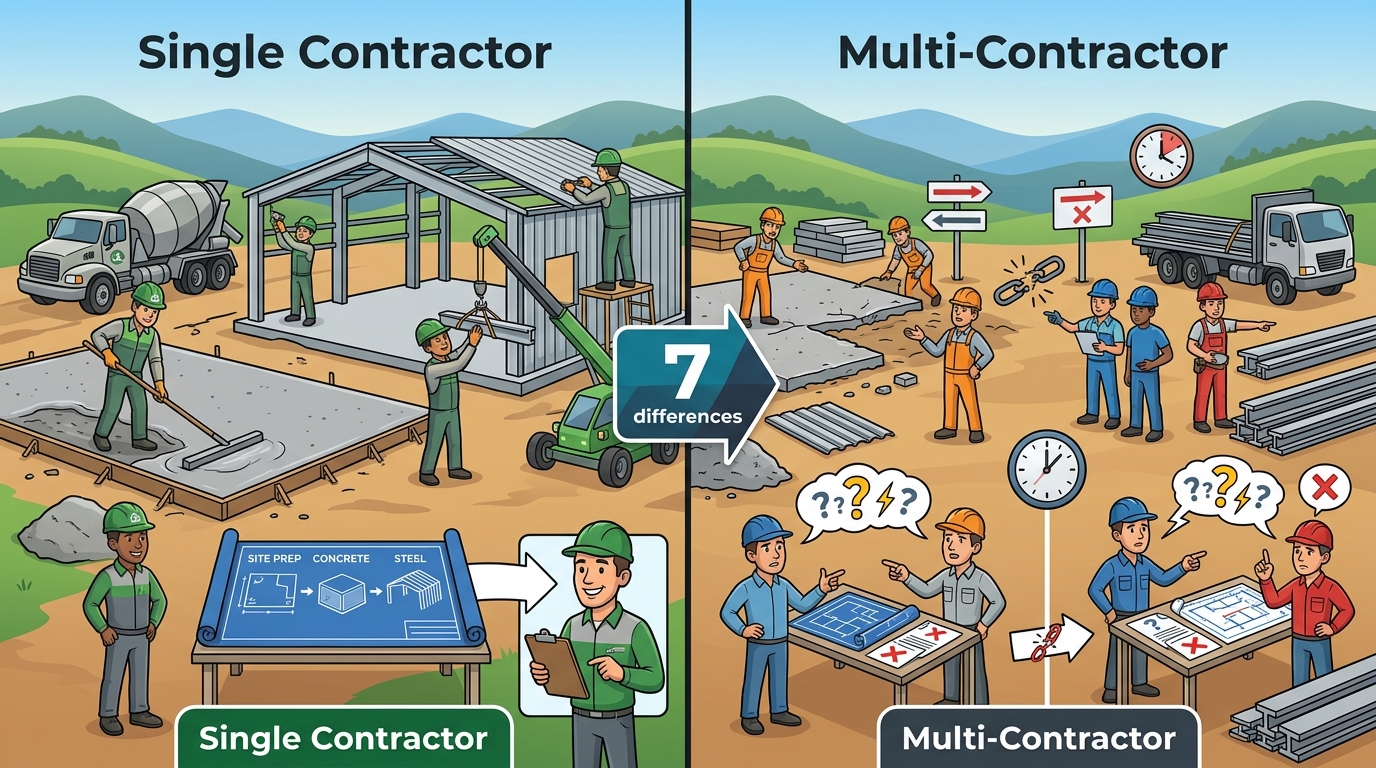
Single contractors manage all equipment and personnel on-site, reducing congestion and safety risks. The crew that pours the concrete knows how the steel will be delivered and installed, so they plan the site layout accordingly. In a multi-contractor scenario, different trucks and crews may arrive at the same time, creating a chaotic and potentially unsafe environment. Efficient logistics are a hallmark of a turnkey provider that handles the entire build.
6. Warranty and Long-Term Support
A single contractor can offer a unified warranty that covers both the foundation and the structure. If a problem arises years later, you do not have to determine whether it is a concrete issue or a steel issue. The company that built the entire system is responsible for the solution. With multiple vendors, you may find yourself in a dispute over liability, where the concrete company blames the steel company and vice versa.
7. Flexibility and Change Management
Single contractors can adapt to changes more easily because they control the production and installation phases. If you decide to add a door or change a color, the single entity can adjust the order and the install plan without external negotiation. Multi-contractor projects require re-bidding and re-scheduling with multiple parties, which is slow and often costly. Flexibility is a significant advantage when working with a team that manages the entire lifecycle of the build.
Choosing the Right Approach
If you value speed, simplicity, and clear accountability, a single contractor is the superior choice. If you have specific relationships with preferred vendors and the time to manage them, a multi-contractor approach might work, but it requires significant oversight. For most homeowners and small business owners, the turnkey model offered by a single provider is the safest and most efficient path to a durable metal building.
Frequently Asked Questions
Is a single contractor always more expensive than hiring separate vendors?
Not necessarily. While individual bids might look lower, the hidden costs of coordination, delays, and potential rework often make the single-contractor approach more cost-effective in the long run.
Can I hire a single contractor for just the steel building?
Yes, but you lose the benefit of integrated foundation and steel coordination. If you hire separate concrete and steel companies, you must ensure their plans align perfectly to avoid fitment issues.
How does a single contractor handle permits and inspections?
They typically manage the entire permitting process, including zoning and building permits, and schedule all required inspections. This saves you from navigating multiple county offices and coordinating with different contractors.
What happens if there is a mistake in a single-contractor project?
The single contractor is fully responsible for correcting the mistake. There is no dispute over liability, and the company will fix the issue at their own cost to maintain their reputation.
Do single contractors offer financing options?
Many single contractors, such as Stoots Storage Solutions, offer financing or rent-to-own programs that cover the entire project, including concrete and installation. This simplifies the payment process compared to financing separate components.
How long does a single-contractor project take?
Timelines vary by size and complexity, but single-contractor projects are generally faster because the phases are managed sequentially by one team. You can expect a more predictable schedule compared to coordinating multiple vendors.